
In this idea
Imagine making a wallet good enough that someone does not need to replace it for years. Excellent product decision. Interesting email marketing problem.
You can keep asking that customer to buy another wallet. Or you can ask a better question: what else belongs in their life, and why would they trust you to make it?
Ridge makes that question worth studying. Its range now stretches well beyond the product that introduced the brand. We can observe that expansion. The retention lessons below are our interpretation of it, not claims about Ridge’s private customer data or the performance of its email programme.
01 / Brand thinking / Retention
The product was a wallet. The idea was bigger.
According to Ridge’s own account, Daniel and Paul Kane launched the wallet on Kickstarter in 2013. Its story describes a broader ambition around functional, minimal everyday essentials.
That distinction matters. A brand organised around a single object has a narrower invitation to return than a brand organised around a recognisable way of solving problems.
Today, Ridge’s storefront includes wallets, key cases, rings, luggage and tech accessories. The expansion is visible. How much repeat purchasing each category produces is not something the storefront can tell us.
Ridge gives an existing customer several possible next chapters. The useful lesson is to study the relationship between those chapters before adding more products to your own catalogue.
Ridge Wallet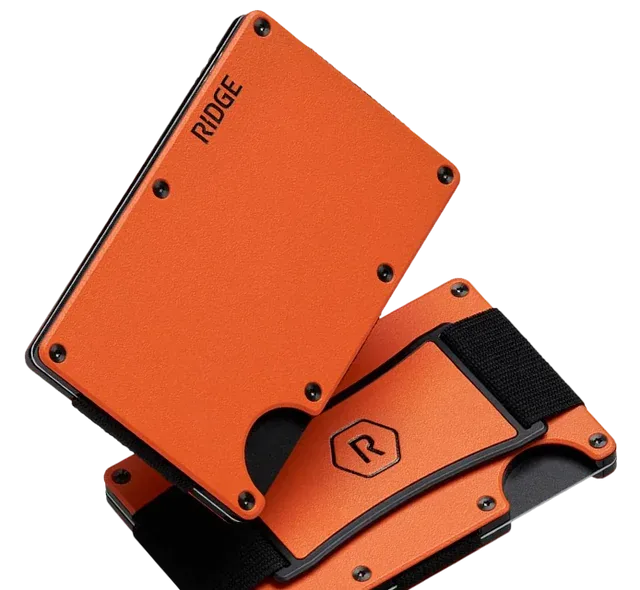
Ridge KeyCase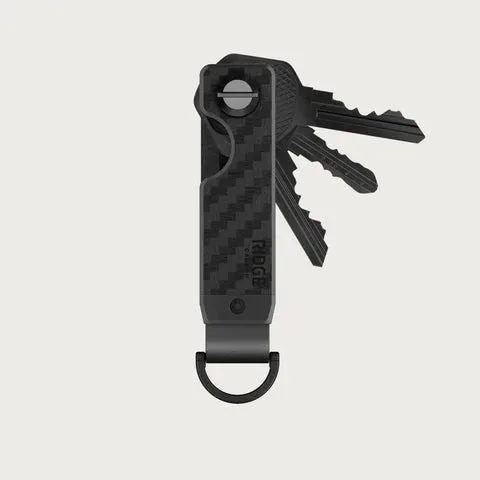
A closer look
Same pocket. A different problem.
The wallet reduces bulk. The KeyCase organises another thing people carry every day. The products make the adjacency visible before an email has to explain it.
Product photography © Ridge. View the source ↗
02 / Brand thinking / Retention
Find the problem next to the one you solved.
A wallet and a key case occupy a familiar part of the same daily routine. Someone interested in reducing pocket clutter can understand the connection quickly. A travel product asks for a bigger step, but Ridge’s luggage range still sits within the broader business of carrying useful things.
That is an explanation a customer can follow. “We had room for another SKU” is not.
Try writing one sentence for each possible next purchase: “Once someone has used our first product, this helps them do ___.” If you need a paragraph of brand strategy to connect the two, the customer may struggle too.
For a coffee store, the answer might be another roast, a refill or a brewing tool. For a running brand, it might be a different weather condition. These are hypotheses to check against customer behaviour, not instructions to launch every adjacent category.
03 / Brand thinking / Retention
Give the next order a job.
“Shop our other products” puts the work on the customer. A useful recommendation makes the connection for them.
- Complete a routine. Show how the second product works with the first.
- Serve another occasion. Help the customer recognise a need beyond the original use.
- Make a gift easier. Offer a familiar product for someone else, with the right context.
- Replace something that runs out. Remind them at a plausible point in actual use.
A durable product may support the first three more naturally than the fourth. Sending a replenishment-style message for something built to last makes the brand sound as though it has forgotten what it sold.
Before briefing an email, finish this sentence: “This is useful now because…” That small discipline can save a lot of unnecessary campaigns.
Travel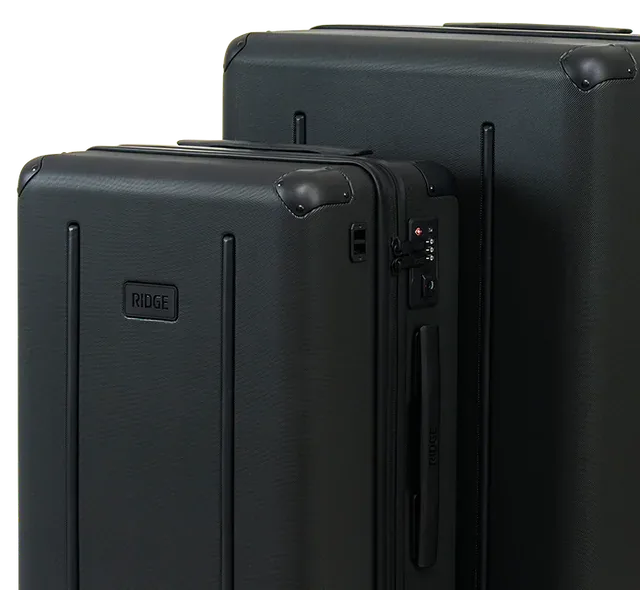
Rings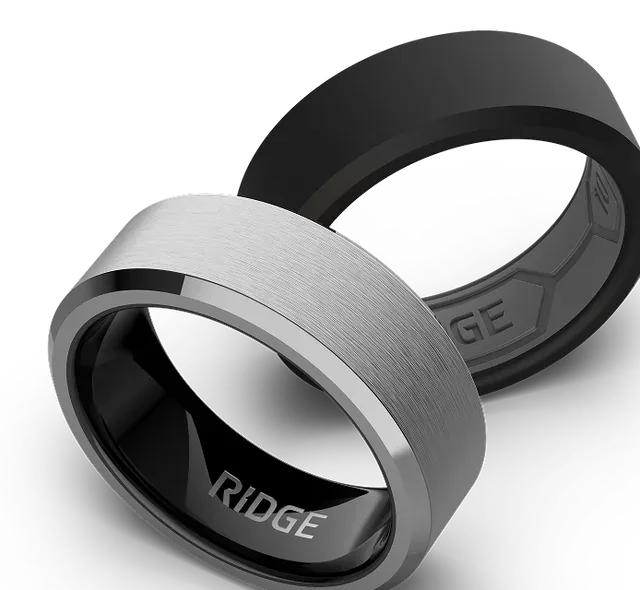
A closer look
From the everyday to the away.
Luggage and rings move beyond the original wallet use case. The range gives us something concrete to question: which next need makes sense for which customer? A visible catalogue is not proof of repeat-purchase performance.
Product photography © Ridge. View the source ↗
04 / Brand thinking / Retention
Let the email follow the product logic.
Suppose you sell a durable everyday bag and a compatible organiser. The first email after delivery could help someone adjust the straps or understand the pockets. A later message could show what the organiser does for a particular task. The connection is practical, and the first purchase has had time to prove itself.
Build that sequence around what the customer owns. Suppress a recommendation if the customer already bought it. If the relationship between products is uncertain, let a click or an explicit preference help you choose the next message.
This is a proposed approach for a store with that range, not a reconstruction of Ridge’s flows. The point is to make the sequence explain a useful progression. A carousel of everything you sell rarely does that on its own.
05 / Brand thinking / Retention
Check whether customers make the same connection.
Start with first-order products, then look at what those customers buy second. Keep first purchases in a defined period and give every customer the same amount of time to return. Compare similar customers; a cohort with six months of history has had more opportunity than one with six weeks.
Look for three things: the share placing a second order, the time between orders, and which products appear in that second basket. Check margin after discounts and returns as well. More orders are less impressive if the economics deteriorate.
That analysis identifies promising relationships. It does not prove an email created them. Customers may already intend to buy the companion item. Where volume allows, randomly split eligible customers into a recommendation group and a holdout group that does not receive that marketing message, while preserving necessary service communication.
The aim is to learn whether your intervention adds value, rather than simply receiving credit for an order that was going to happen.
06 / Brand thinking / Retention
You do not need a bigger catalogue tomorrow.
Product expansion introduces real work: sourcing, stock, support, forecasting and a new promise to keep. An email team cannot make an unsuitable product relevant through persistence.
Start with what already exists. Pick your strongest first-purchase product. Read its reviews and support questions. Look at the next products people actually buy. Ask customers what they use alongside it and what remains frustrating.
Then build one credible next step. A better explanation of an existing accessory may be more useful than a speculative new category. A care email may matter more than either.
Ridge is a useful prompt to think beyond the hero product. Your answer should come from your customers. Stay hungry enough to look for the next opportunity. Stay foolish enough to question whether the obvious one is actually useful.
A second thought. A next step.
What comes after your hero product?
Let’s find a useful next chapter for your customers.
Talk it through with us