
In this idea
Someone has just bought from your store. Before the parcel arrives, you send them a discount on their next order. A day later, you ask for a review. Then another campaign introduces the product they already purchased.
Every message might look reasonable in a calendar. Together, they make the brand look inattentive.
The first purchase gives you useful information and a promise to fulfil. A better post-purchase sequence uses both. Help the customer feel confident, get value from the product, and recognise a sensible reason to return.
01 / Email / Customer experience
Start with the inbox your customer actually sees.
Place a test order and list every message that follows: confirmation, delivery updates, welcome emails, review requests, loyalty notices and ordinary campaigns. Include messages sent by apps and your commerce platform.
Then put them in the order a customer receives them. You may discover three different systems saying thank you, or a welcome discount arriving after the customer paid full price.
Klaviyo’s post-purchase setup guidance specifically recommends considering other messages and distinguishing first-time from returning buyers. Use that as the starting point for a joined-up experience.
Give each message one useful job. If two messages do the same job, combine or remove one. A shorter sequence with a clear purpose is easier to maintain and easier to receive.
02 / Email / Customer experience
First, make the customer feel looked after.
The first questions are usually straightforward: did the order work, when will it arrive, and where can I get help?
Answer them clearly. Keep order and shipping information prominent. Give customers a working support route and realistic expectations. A beautiful confirmation that makes the order number difficult to find is doing the wrong kind of design work.
Keep service messages and promotional messages distinct in your setup. Klaviyo’s post-purchase playbook treats transactional and promotional messages separately. Calling an email “order information” does not turn an added sales pitch into essential service content.
For this sequence, send promotional emails only to eligible marketing recipients. Preserve necessary order communication separately. The practical design question is simple: does this message help with the purchase already made, or ask for another one?
Caudabe / Order confirmation / Detail ↗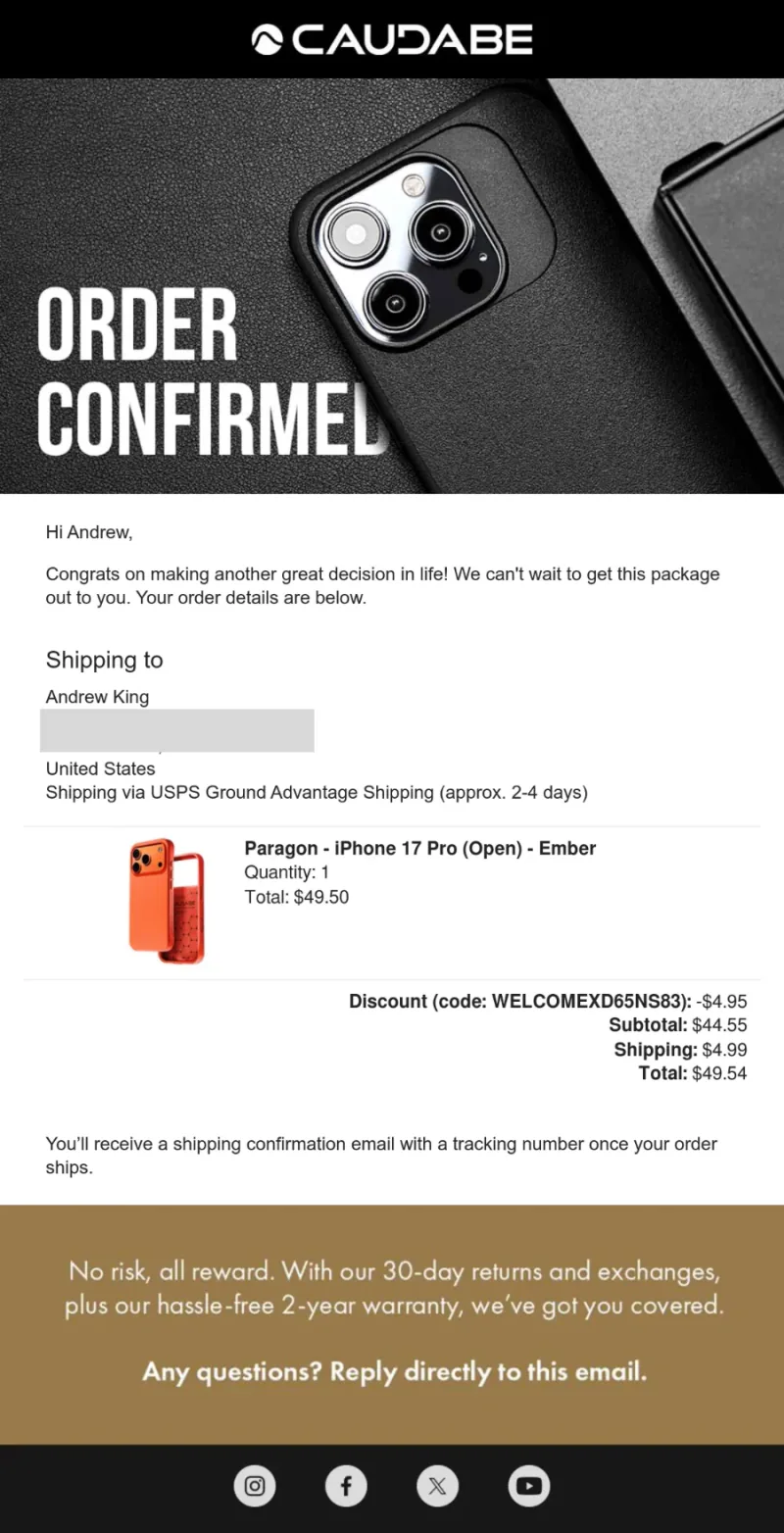
A closer look
Confidence, in the inbox.
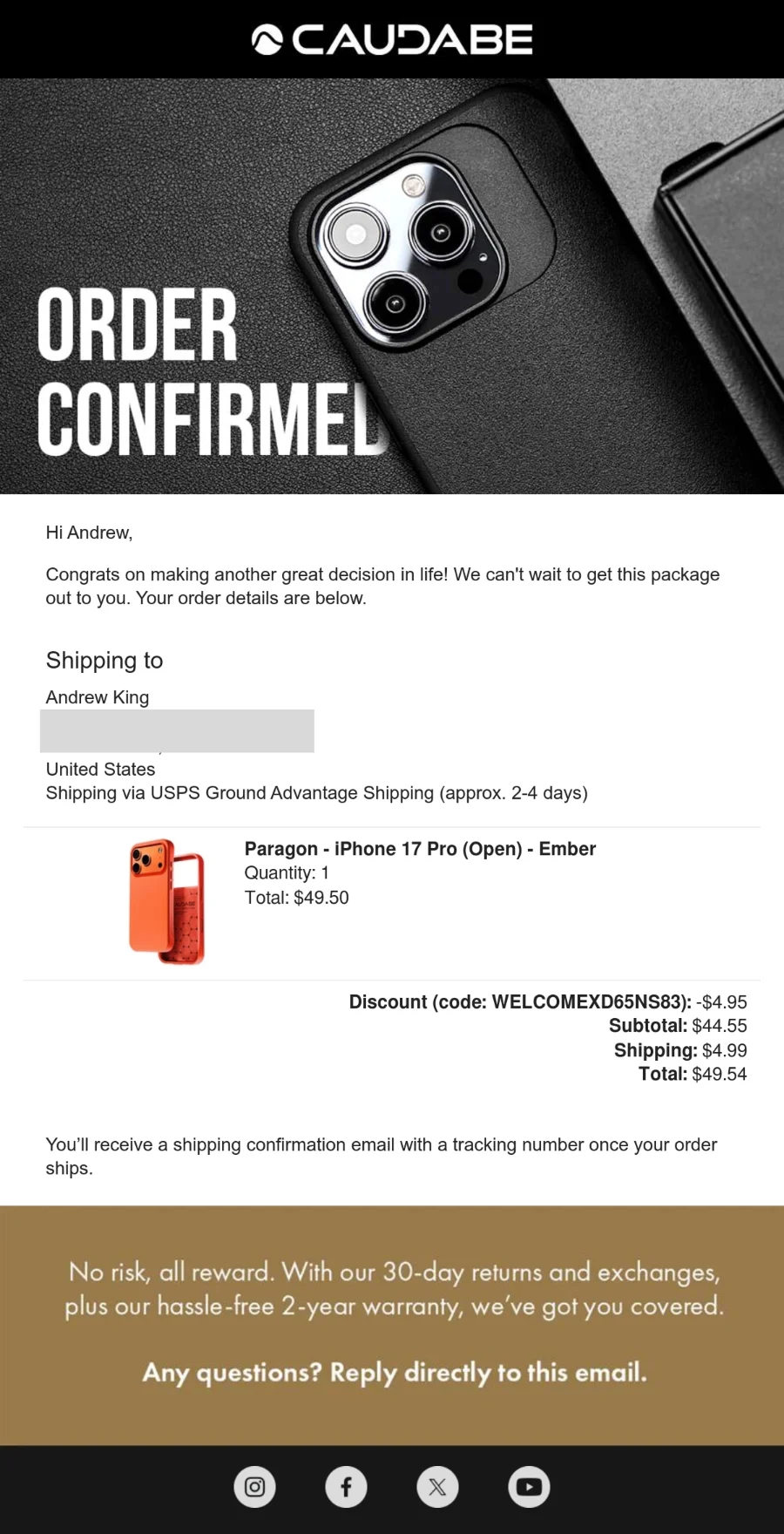
Caudabe’s confirmation pairs a clear order message with shipping expectations and a direct invitation to reply. Those details give the customer a useful next step before another sales message arrives.
Email by Caudabe, archived by Email Love. View the source ↗
03 / Email / Customer experience
Help them get the first good result.
Before asking for another purchase, look for the part of using your product that a new customer might get wrong.
- For coffee, explain a starting brew ratio and what to adjust if it tastes too strong.
- For clothing, explain fit, care and the exchange route without making the customer hunt.
- For a kitchen tool, show one achievable first use rather than every possible feature.
These are illustrative starting points. Choose the lesson from real support questions and product knowledge.
Time it around arrival and use. A reliable delivery event is more useful than assuming every parcel arrives three days after purchase. If you only have order or fulfilment data, leave a realistic buffer and acknowledge uncertainty in the wording.
Make the action small: watch a short demonstration, read the care instructions, try one recipe. Success with the product is the work here.
A closer look
Help the purchase become a habit.
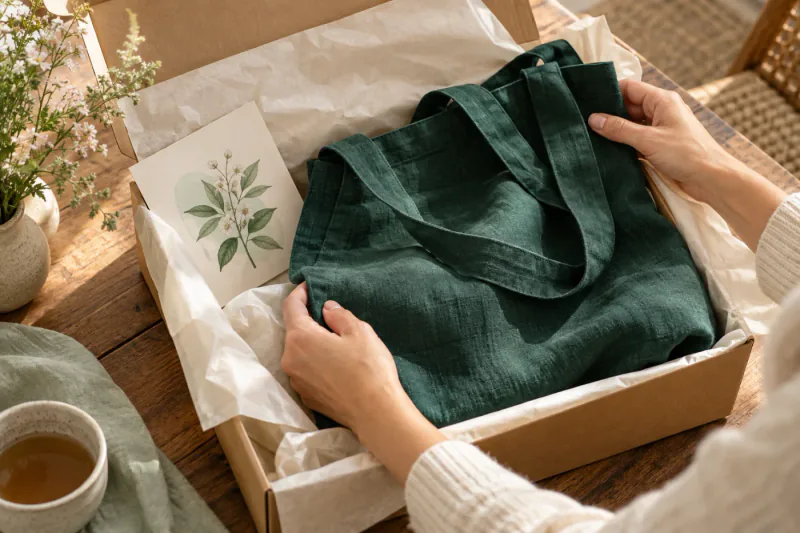
The opening of the parcel is a beginning. A care tip, a setup lesson or one answer to a common question can connect the email to the product in someone’s hands.
Original AI-generated editorial illustration by Foolish.
04 / Email / Customer experience
Leave room for an answer you did not plan for.
After a reasonable opportunity to use the product, invite feedback. For some products that takes days; for others, weeks. Do not ask someone to rate a result they could not yet have experienced.
“How is it going?” only works if someone is responsible for the answer. Use a monitored reply address or a clear support link, and decide who handles problems before switching the email on.
If a customer has a delivery issue, open return or unresolved complaint, pause the generic next-order pitch where your systems allow. Help them complete the first experience properly.
For public review requests, invite honest feedback consistently. Keep the route open to all eligible customers instead of only directing apparently happy people to leave a review.
05 / Email / Customer experience
Choose the next reason before choosing the next offer.
There are several possible next orders. A refill. Another colour. A compatible accessory. A gift. Your customer may need one of them, none of them, or simply more time.
Use the original purchase and later behaviour to narrow the recommendation. Explain the connection: what does this next product help them do? Check that it is in stock, compatible and not already owned before the message sends.
For consumables, use pack size, expected usage and actual repeat-order patterns to estimate a replenishment window. Klaviyo’s email and SMS replenishment guidance provides a useful implementation reference, including timing tests and different paths for first-time and repeat buyers.
A consumption estimate is still an estimate. “Running low?” is more honest than claiming to know what is left in someone’s cupboard. If they already reordered, stop that reminder.
Test the recommendation before assuming it needs a discount. Convenience, relevance or a useful bundle may provide a stronger reason to act.
06 / Email / Customer experience
A sequence to test, not a timetable to copy.
- At purchase: clear order information and support access.
- Around arrival: one piece of help for a successful first use.
- After meaningful use: a check-in or honest review request.
- At a relevant next-use moment: one suitable recommendation or refill reminder.
This is a planning framework. It does not require four extra emails, and the intervals should come from your product. A dress, a bottle of cleanser and a durable coffee grinder deserve different sequences.
Before launch, check the experience for a first-time buyer, returning customer, refunded order and someone who purchases again early. Confirm that service messages still arrive and obsolete promotions stop.
Judge the programme with customers who have had equal time to return. Look at second-order rate, time to return and margin alongside unsubscribes, complaints and support feedback. Email clicks help diagnose interest; they do not prove the sequence caused another sale.
The next purchase starts with the first product doing what you promised. Your emails should help that happen.
A second thought. A next step.
Make the first order count.
Let’s build a customer journey with a reason to come back.
Talk it through with us